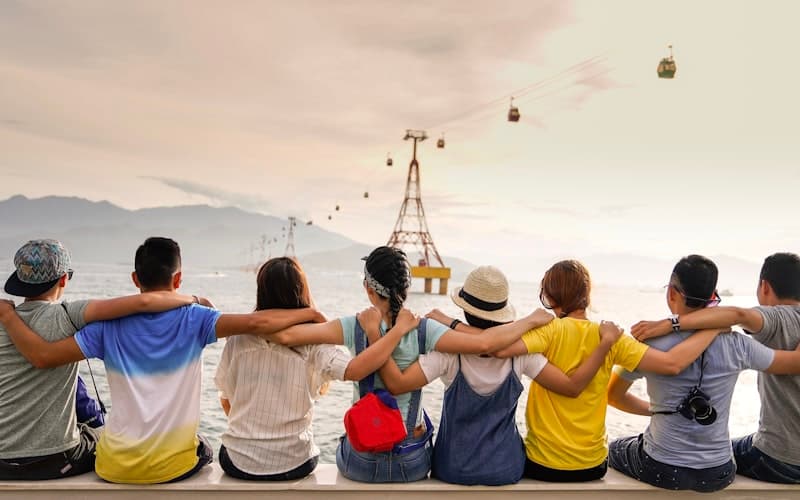
Universal Fraternity
Universal fraternity is one of the fundamental principles of Freemasonry. It transcends differences of nationality, religion, social class or political opinion to unite men and women around common values.
This conception of fraternity is not a mere declaration of intent, but an ideal lived daily in Masonic lodges. Freemasons call each other 'brothers' and 'sisters' to mark this particular relationship that unites them, founded on trust and mutual respect.
The chain of union, a ritual where all lodge members hold hands forming a circle, symbolizes this concrete fraternity. It reminds us that every link is essential and that the strength of the chain depends on its weakest link.
Beyond the temple walls, this fraternity translates into active engagement in society. Freemasons aspire to extend the principles lived in lodge to all of humanity, thus contributing to the emergence of a more fraternal world.
In a world often divided by prejudice and conflict, the ideal of universal fraternity proposed by Freemasonry offers a humanist perspective where each individual is recognized in their dignity and where differences are perceived as a richness rather than a threat.